Finding a dentist who understands your child’s specific needs and who takes the time to adjust care around them can make all the difference in whether dental visits feel manageable or overwhelming. If you are searching for a caring pediatric dentist in Fremont who genuinely welcomes children with special health care needs, we want you to know that support is available here, and that your family will not be treated as an afterthought.
At Mission Peak Pediatric Dentistry, Dr. Michael Wang and our full team are glad to care for children with a wide range of physical, developmental, behavioral, and sensory needs, alongside the full scope of care we provide, including sedation dentistry for kids who need extra support to feel comfortable in the chair. We approach every child as an individual, adjusting our pace, communication style, and treatment environment to fit what actually works for them, rather than expecting every child to adapt to the same fixed routine.
Special health care needs cover a broad range of conditions, including developmental disabilities, sensory processing differences, anxiety disorders, and various physical or medical conditions that require extra consideration during dental care. According to the American Academy of Pediatric Dentistry, roughly 18.5 percent of children in the United States have a special health care need, and dental care has consistently ranked among the most significant unmet needs for these families over the past two decades of research.
Many of these gaps come down to access rather than a lack of demand from families. Finding a dental office nearby that accepts a family’s insurance and is equipped to accommodate a child’s specific needs is not always simple, and that reality shapes how we think about scheduling and appointment structure for these visits at our own practice.
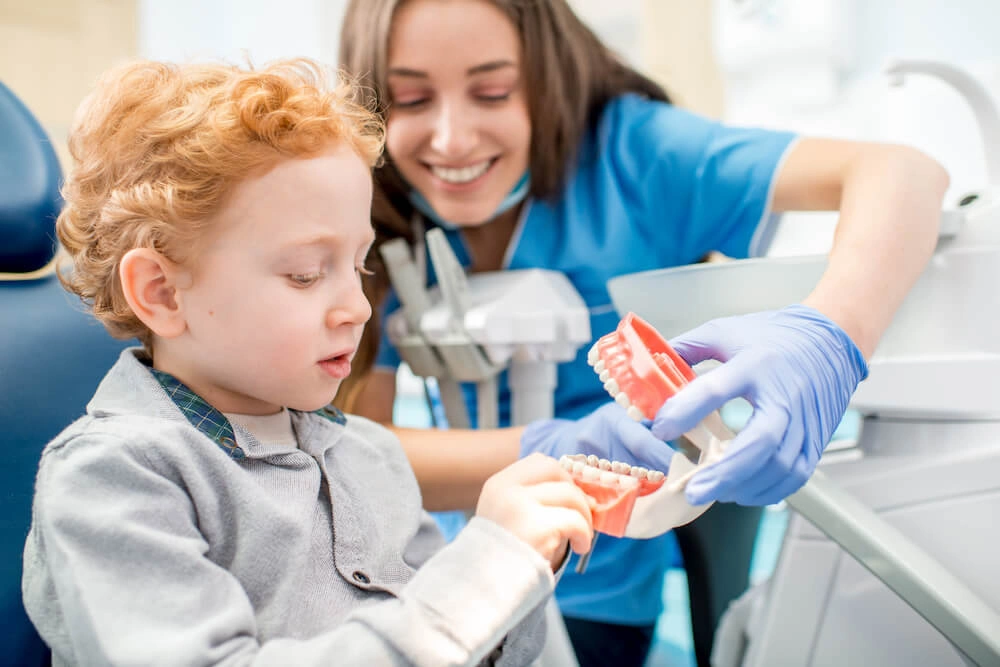
We take extra time to understand each child before any treatment begins, learning what tends to help them feel calm and what might make a visit harder. This might mean a longer initial appointment focused purely on introductions, a quieter treatment room, or breaking a procedure into smaller steps spread across more than one visit rather than trying to finish everything at once.
For children who need additional support managing anxiety or sensory overwhelm, we also offer nitrous oxide and other sedation options as part of our broader sedation dentistry services. Having these tools available lets us tailor an approach to what each specific child needs, rather than applying the same plan to every appointment regardless of how a child responds to sounds, lights, or the dental setting itself.

Every family’s situation looks different, so we try to have an honest conversation before scheduling, discussing your child’s specific needs, any prior dental experiences, and what has worked well or poorly in the past. This helps us plan a visit that has a real chance of going smoothly, rather than guessing at what your child might need once they arrive at our office, and it lets us prepare our team in advance rather than adjusting on the spot.
As a solo practice, we care deeply about being able to give each child the time their visit truly requires, so we ask families to reach out ahead of time to talk through scheduling. This helps us protect the appointment length these visits often need, rather than rushing through care that deserves patience and a slower pace than a typical checkup, especially during a first visit when trust is still being built.
Preventive visits remain just as important for children with special health care needs, and often more so, given how much unmet dental need research continues to find in this population. Keeping up with routine preventive dentistry alongside any tailored accommodations helps avoid more complicated treatment later on, and it gives us a consistent baseline to track how your child’s oral health is developing over time and adjust our approach as needed.
If a dental concern comes up unexpectedly, our emergency dentistry team is also available, because we understand urgent situations can be especially stressful for families already managing a lot day to day. Knowing there is a familiar team to call, one that already understands your child’s needs, tends to make those moments feel less overwhelming. We want every family in Fremont, including those near Parkmont, Niles, and the historic Mission San José, to feel welcome here, and we are always glad to talk through what a visit might look like for your child before you ever step through our doors, so nothing feels like a surprise on the day of the appointment.
Dr. Wang’s pediatric residency training and board certification through the American Academy of Pediatric Dentistry inform how Mission Peak Pediatric Dentistry approaches care for every child, including those with special health care needs. We want every family in Fremont to feel welcome here, and we are always glad to talk through what a visit might look like for your child before you ever step through our doors, so nothing feels like a surprise on the day of the appointment.
If you would like to discuss your child’s specific needs before scheduling, please contact our office today, and we will help you figure out the right next step for your family and your child’s ongoing care.
Some useful tools in treating patients with special needs are to provide open, honest, and trustworthy dental care by establishing a consistent dental home.
Our Fremont pediatric dentist is an expert in your child’s oral health care and taking them to the same dentist from a young age will reduce dental anxiety and foster positive feelings toward dental care.
We can also offer dental sedation for those with physical disabilities or dental anxiety. If your child requires alteration to the environment in the treatment room, we are happy to make these accommodations.
This may include altering the lighting, changing to a bigger room, allowing them extra time to complete their appointment, and providing them with comforting amenities like noise-canceling headphones and entertainment.
If you can provide us with their relevant medical history so we know what special needs to take into consideration and what medications if any they are taking, this will help guide our treatment practices.
Developmental, physical, or medical conditions that affect your child’s ability to receive traditional dental treatment are considered special needs. This can include something like dental anxiety because it can provide barriers to treatment.
Conditions like Autism, Down Syndrome, ADHD, epilepsy, visual or hearing impairment, mental health conditions, and brain conditions or injuries are just some examples of special needs.
However, conditions like depression and sleep apnea can also fall under this umbrella term, as people with these conditions have an increased risk of oral health problems that directly correlate with their overall health and may affect our approach to their treatment.
Physical and cognitive conditions may affect their oral health by inhibiting their ability to sit for a dental appointment in a traditional setting. A child with sensory issues, autism, or dental anxiety may feel overwhelmed or stressed by seeing the dentist, but it doesn’t have to be this way.
Certain medical conditions can affect your child’s saliva production, cavity risk, susceptibility to gum disease, and ability to eat certain foods. All of these things have a significant impact on their oral health.
The most important thing is for your child to be brushing their teeth twice a day with a soft bristle toothbrush and fluoride toothpaste. Other than this, the type of toothbrush they use and the method of brushing their teeth is less important.
If your child has dexterity issues, you may need to brush their teeth for them, assist them, or monitor them. Show them how to hold and use their toothbrush and then instruct them as they do it themselves. Pick out a toothbrush that improves their ability to brush with ease.
This may mean selecting a toothbrush with a larger handle and a smaller head. Let them choose a toothbrush that they like which increases the likelihood that they will want to brush their teeth. Make sure they are using the proper amount of toothpaste for their age.
We use cookies to improve your experience on our site. By using our site, you consent to cookies.
Manage your cookie preferences below:
Essential cookies enable basic functions and are necessary for the proper function of the website.
CloudFlare provides web performance and security solutions, enhancing site speed and protecting against threats.
Service URL: developers.cloudflare.com (opens in a new window)
These cookies are needed for adding comments on this website.
Google reCAPTCHA helps protect websites from spam and abuse by verifying user interactions through challenges.
Google Tag Manager simplifies the management of marketing tags on your website without code changes.
Statistics cookies collect information anonymously. This information helps us understand how visitors use our website.
Google Analytics is a powerful tool that tracks and analyzes website traffic for informed marketing decisions.
Service URL: policies.google.com (opens in a new window)
Marketing cookies are used to follow visitors to websites. The intention is to show ads that are relevant and engaging to the individual user.
Google Maps is a web mapping service providing satellite imagery, real-time navigation, and location-based information.
Service URL: policies.google.com (opens in a new window)